
Carbon-free baseload
Nuclear generation runs continuously rather than with the weather, which is what a data centre load actually needs.
Nukler SMR is small modular reactor technology developed by Nukler, a Slovak company. Aqylon is its technology partner in India: we build the monitoring, control and security electronics that run alongside the reactors, and we develop the data centre sites that the power is for.
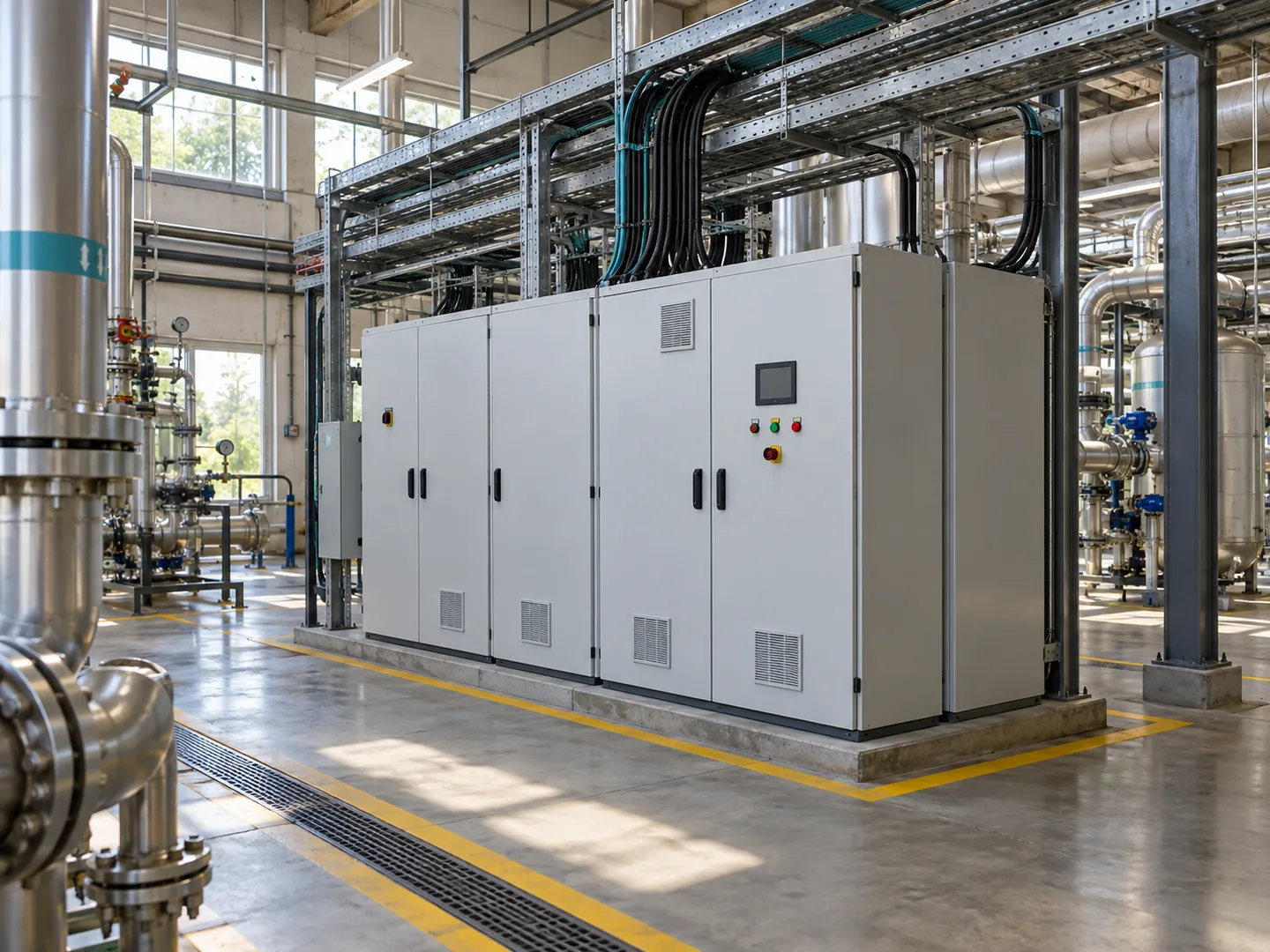
Nuclear generation runs continuously rather than with the weather, which is what a data centre load actually needs.
Reactors are factory-built and shipped in ISO container format, so a site is assembled rather than constructed from scratch.
Aqylon supplies the computing and security subsystems that monitor and control the plant, built on our own silicon.
A small modular reactor is factory-built, shipped as modules and assembled on site, instead of being constructed in place over a decade. The Nukler design uses TRISO fuel, in which the fuel particles are encased in ceramic layers and a silicon-carbide matrix that hold their integrity at high temperature, and a dual-cooled arrangement using helium gas and liquid salt so that cooling does not depend on a single path.
We do not manufacture reactors. Our contribution is the instrumentation layer: the Ciradis computing subsystem for plant control, the Anujata security subsystem providing a hardware root of trust, and NexusEdge silicon for distributed monitoring. It is the same edge-AI engineering we apply in industrial settings, held to nuclear expectations.
In January 2026 Nukler submitted an expression of interest to develop an SMR-based clean energy project in Telangana, reported at around Rs 6,000 crore, with Aqylon's monitoring and management systems part of the proposal. The project is at proposal stage and subject to regulatory approval. Nothing is generating power yet, and we will say so plainly until it is.
High-density compute needs power that is both continuous and carbon-free, on a site the operator controls.
On-site generation for loads that cannot absorb grid interruptions.
Locations where extending transmission is slower and costlier than generating locally.
No. The reactor technology is Nukler's. Aqylon is the India technology partner: we supply the computing, monitoring and security subsystems, and we develop the data centre sites the power serves.
No. An expression of interest for a project in Telangana was submitted in January 2026. It is at proposal stage and requires regulatory approval before anything is built.
Data centre load is flat and continuous, while solar and wind are not, so a renewable-only site needs storage or grid backup sized for the gap. Nuclear generation matches the shape of the load directly. The two are complements rather than rivals.